Pillar Page and Content Cluster Strategy for SEO
Structured content clusters now power visibility across Google and AI answer engines simultaneously.
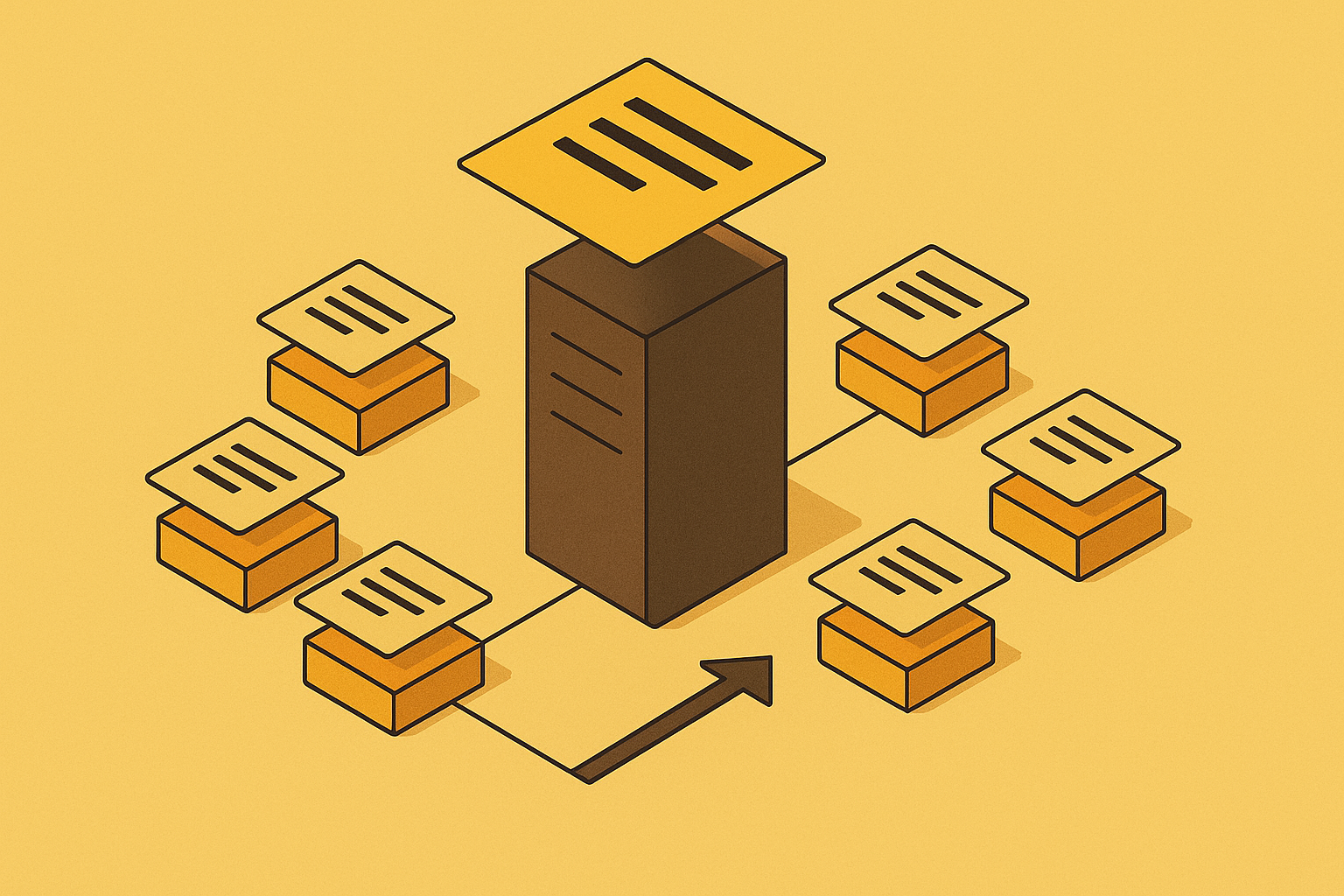
A coherent pillar-cluster architecture has stopped being an SEO tactic and become the foundational content investment for earning visibility on Google and AI answer engines at once. Google's crawlers once evaluated pages in isolation, scoring each one on its own keyword density and backlink count. That model no longer describes how visibility gets allocated. Some AI answer engines, Perplexity among them, run on Retrieval-Augmented Generation and pull from live indexed sources on every query, while others, ChatGPT among them, generate primarily from training data and invoke live retrieval only under certain conditions. Both approaches end up favoring the same well-linked, topically complete content ecosystems that Google already rewards, so a page can lose Google clicks and gain AI citations within the same quarter, and that is why betting on a single surface is an incomplete strategy. The convergence is not an accident of timing: Google and AI systems are both trying to identify genuine subject-matter authority, and a structured cluster remains the clearest signal of that authority a publisher can send.
Topical authority and how a cluster signals it
Topical authority differs from domain authority in a specific way: a site with a modest external link count but deep, coherent coverage of one subject will consistently outrank a high-authority domain that publishes thin, disconnected content across many unrelated topics. The architecture that produces this outcome has three working parts. A pillar page is a long-form guide to a broad topic, usually 3,000 to 5,000 words, covering the subject at a strategic level, introducing every major angle, and linking out to cluster pages for deeper treatment of each subtopic. Cluster pages are the focused articles that go deep on one subtopic the pillar introduced, each targeting long-tail keywords related to the pillar's head term, each linking back to the pillar and occasionally to adjacent cluster pages, with a typical cluster running 5 to 15 supporting pages. Internal links bind the two together: bidirectional linking, pillar to cluster and cluster to pillar, using descriptive anchor text that includes the pillar's target keyword, distributes PageRank and reinforces the topical signal, while generic anchor text like "click here" or "learn more" passes no topical signal.
Google's systems look for several things simultaneously when assessing a topic area: the volume of indexed pages covering the topic and its subtopics, the internal link coherence between thematically related content, the semantic coverage of entities and concepts within the topic space, the external backlinks arriving from authoritative sources in the same topical domain, and user engagement patterns across the cluster. A broader evaluative framework functions as the lens applied to all of this: it asks whether the content demonstrates real experience with the subject, whether its authorship carries genuine expertise, whether the domain has earned authority within the topic, and whether the site gives readers reason to trust what it says. A cluster that is well structured gives Google a coherent answer to all four questions at once, because the depth and the interlinking are themselves the evidence.
How AI answer engines read a cluster differently from Google
AI answer engines add a second retrieval logic on top of Google's, so if a cluster ranks well but isn't structured for AI extractability, it will be cited far less often than its ranking position would predict. Retrieval itself is the mechanism behind this gap. AI systems that use RAG find indexed sources and then extract passages from them to anchor their answers, so if a page ranks highly but delivers few extractable, self-contained statements, it simply won't get cited, no matter how well it performs in traditional search. The operative concept here is chunkability: AI models extract segments of content that can stand alone as answers, and content organized with clear headings and self-contained sections between them is far more extractable than dense, continuously flowing prose.
The clearest expression of this principle is the Atomic Answer format, a self-contained response of a few dozen words that directly answers a question and appears early in the article. A disproportionate share of AI citations come from the first third of articles, so front-loading the conclusion rather than building up to it dramatically increases the odds that a page gets cited. Freshness compounds the effect: AI-cited content is on average materially fresher than traditionally ranked content, and different platforms tolerate staleness differently, so regularly updating cluster pages improves citation probability independent of whatever it does for ranking.
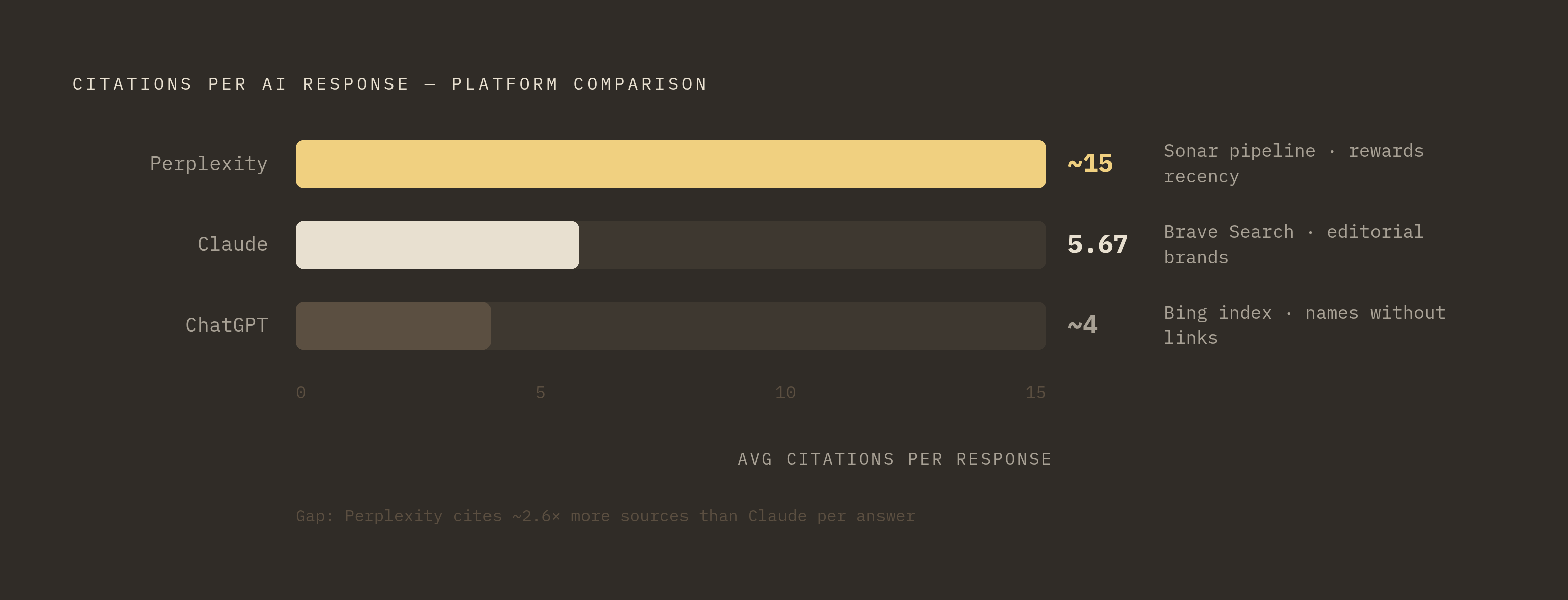
Platform behavior diverges so sharply that the same content strategy produces three different outcomes. ChatGPT, drawing on the Bing index, tends to mention brands by name more often than it cites them with links, and Wikipedia accounts for a substantial share of its top citations. Perplexity, running its Sonar pipeline, averages many more citations per response than ChatGPT and rewards recently updated content strongly. Claude, pulling from Brave Search, cites more selectively than Perplexity, averaging around 5.67 citations per answer, and biases toward premium, slow-moving editorial brands. Building for AI citation isn't a single target but three overlapping ones, and the cluster has to satisfy the structural logic common to all three even as it accepts that any given platform will reward it unevenly.
Building the cluster: choosing topics, defining the pillar, and mapping cluster pages without cannibalization
Most cluster failures trace back to design decisions made before a single sentence gets written: the wrong topic scope, a pillar that's too shallow, or cluster pages that overlap and compete with each other. Choosing the core topic correctly is the first and most consequential decision. The pillar topic needs to be broad enough to support 8 to 12 cluster articles without overlap, genuinely searched by the target audience with measurable volume, and narrow enough that the publisher can credibly produce real depth on it. "Marketing" fails this test by being too broad to cover coherently; "email subject line testing" fails it by being too narrow to support a dozen distinct cluster pages. "Email marketing" is in the workable range, with deliverability, list building, segmentation, automation, and analytics each supplying a natural cluster candidate. Keyword research tools, Google Search Console, Ahrefs, and Semrush among them, can confirm that the core topic has a high-volume head term and that its surrounding subtopics carry their own measurable demand before any resources go into building the cluster around them.
Designing the pillar page itself means building something that functions as both a destination and a map: it covers the broad topic at a strategic level, introduces every major angle, goes deep enough on each to be genuinely useful on its own, and links out to dedicated cluster pages for readers who want more on any specific subtopic. The word count target, 3,000 to 5,000 words, isn't arbitrary padding; thin pillar pages undermine the authority signal the entire cluster depends on, because a shallow pillar tells both Google and an AI retrieval system that the site hasn't actually mastered the subject it claims to cover.
When you map the cluster pages that hang off that pillar, you need subtopics each with a distinct angle and a distinct primary search intent, because if two cluster pages compete for the same intent, they split ranking signals instead of reinforcing them. Content gap analysis helps here: mapping existing coverage against competitor cluster structures reveals missing subtopics, and pages that address gaps competitors haven't covered capture long-tail traffic while strengthening the pillar's E-E-A-T signals at the same time. Diversifying content types within the cluster, case studies, how-to guides, expert insights, comparison articles, and troubleshooting pieces, addresses both beginner and expert queries and improves the odds of earning featured placement in traditional search results and in AI-generated answers alike.
Writing cluster content that ranks on Google and gets extracted by AI simultaneously
The on-page choices that make a cluster page rank well and the choices that make it extractable by AI are mostly the same choices, though a handful of decisions need to be made deliberately with the second surface in mind. For Google, the governing framework remains E-E-A-T: experience shows up as real data, specific examples, and organizational insight rather than generic summary; expertise shows up as named authors with verifiable qualifications, which outperform anonymous bylines; authoritativeness comes from backlinks earned from trusted sources within the same topical domain; and trustworthiness comes from the basics, HTTPS, visible contact information, and content that stays accurate and gets updated as facts change.
AI extractability adds a layer on top of that foundation, but it doesn't replace it. Content needs clear headings with self-contained sections between them, and those sections need enough room to stand on their own as a complete answer, because if a section is too short, an AI system has too little material to cite with confidence. Conclusions need to be stated early rather than built toward, since a disproportionate share of AI citations draw from the first third of an article, and a concise passage that directly answers the page's core question near the top does more to earn citation than the same answer buried in paragraph twelve. The academic study of generative engine optimization signals, conducted by Pranjal Aggarwal and colleagues and presented at KDD 2024, found that adding quotations from credible sources, clear statistics and data, and inline citations each produced a meaningful increase in a source's share of the AI-generated answer, while keyword stuffing produced the opposite effect, lowering the odds of citation. Readability compounds all of this: prose dense with jargon is equally hard for an AI system to extract cleanly and for a human reader to parse, so clarity functions as a technical requirement. Regular updates round out the picture: freshness affects citation probability on most platforms directly, and Perplexity rewards recently updated content more strongly than the others do.
Internal linking execution is where the architecture gets tested in practice. Every cluster page needs to link back to the pillar using anchor text that includes the pillar's target keyword, and if you skip this, the signal won't register. The pillar, in turn, needs to link to every cluster page beneath it, since bidirectional linking distributes PageRank and reinforces the topical signal crawlers are looking for. Cluster pages can link to one or two related cluster pages where it makes sense, and this strengthens the semantic web running through the cluster, but it doesn't force connections that don't exist. Internal links deserve a refresh on a quarterly cadence as new cluster pages get added, and you should put pillar pages in both the footer and the main navigation menu wherever that's feasible, so internal link equity flows and no key page gets buried three clicks deep.
The grounding page: making your cluster's facts machine-readable for AI retrieval
AI systems often know a brand exists but don't cite it consistently, or don't cite it at all, because nothing in the brand's content gives them one authoritative source to draw the brand's core claims from. A dedicated grounding page solves this specific problem. It accelerates AI citation of the brand in ways ordinary cluster content doesn't, because it hands AI systems one structured, machine-readable source for what the brand is and does. A grounding page is a real HTML page living under its own URL, a path like /grounding-page/ or /facts/, and it combines visible text as the primary source with structured data in JSON-LD format beneath it, linked sitewide from the footer. It functions as a kind of semantic imprint, clarifying the brand's identity for machine retrieval the way a legal disclosure page clarifies obligations for a different audience.
The documented effect of this approach is striking given how little else it depends on. A fresh domain built to the grounding page standard, registered in November 2025 with virtually no backlinks to its name, was referenced as a source in ChatGPT, Perplexity, and Google Gemini within three weeks of launch. That outcome demonstrates that machine-readability can accelerate AI citation on its own, separate from the backlink accumulation and domain aging that traditional authority-building has always required. A grounding page doesn't substitute for the cluster itself. It functions as the anchor point that makes the cluster's surrounding content attributable to a specific, consistently described entity rather than a loose collection of pages an AI system can't confidently tie together.
That consistency has to hold across the entire cluster, not just on the grounding page itself. The brand's name, address, description, and list of services need to match across every page in the cluster and every off-site property that mentions the brand, because any inconsistency creates ambiguity, and AI systems resolve ambiguity by citing a different, more consistent source instead.
Off-site signals that AI engines use to corroborate what your cluster claims
The majority of branded AI citations originate from off-site surfaces: review sites, listicles, press coverage, and directories. The cluster's authority has to be corroborated externally before it converts into reliable AI citation. The entity consistency built into the grounding page extends outward into every one of these third-party surfaces: a directory listing with an outdated address, a review platform with the wrong service description, or a press mention that names the brand differently than its own site does, each introduces the same ambiguity an AI system resolves by citing somebody else. A cluster can be architecturally sound, its pillar deep, its cluster pages well-linked, its grounding page precise, and still lose citation share to a competitor whose off-site footprint simply agrees with itself more consistently. Building the cluster is the first half of the work. Whether the rest of the internet describes the brand the same way the cluster does decides whether any of it gets cited.