CI/CD Pipeline Integration for Developer Content Publishing
Docs and code must release together through CI/CD gates to ensure AI can cite accurate information.

Publishing developer content should be part of the CI/CD pipeline because docs, changelogs, and technical pages need the same release controls as code. Those controls also affect what AI answer engines can find and cite. Making content a named stage lets teams ship information that has been reviewed and versioned with the software it explains, then check whether it reaches buyers through AI answers.
Why developer content has become a CI/CD problem
A product ships, its docs lag a sprint behind, and an AI answer cites the old behavior. The release is complete, but its explanation is wrong. For an engineering buyer researching the product, that stale answer may be the information available at the moment of decision. Developer content now serves as a primary citation source for AI answer engines, so a broken publish is more than an SEO liability. It is a failure to deliver accurate product information where buyers look.
An editorial workflow without build gates, staging, or rollback exposes content to the same problems that made manual software releases unreliable. A page can contain careful prose yet ship with the wrong version number, missing schema, or contradictory metadata. Because answer engines retrieve from both the live web and indexed corpora, those defects can undermine citation long after someone presses publish.
The infrastructure for a different approach already exists. Octopus Deploy describes CI/CD as the practice of automating the building, testing, and deploying of code. Developer teams use that same pipeline to start docs builds and static-site deployments. A deployment command on its own gives content no editorial gate.
What a CI/CD pipeline actually does and why its primitives map to content
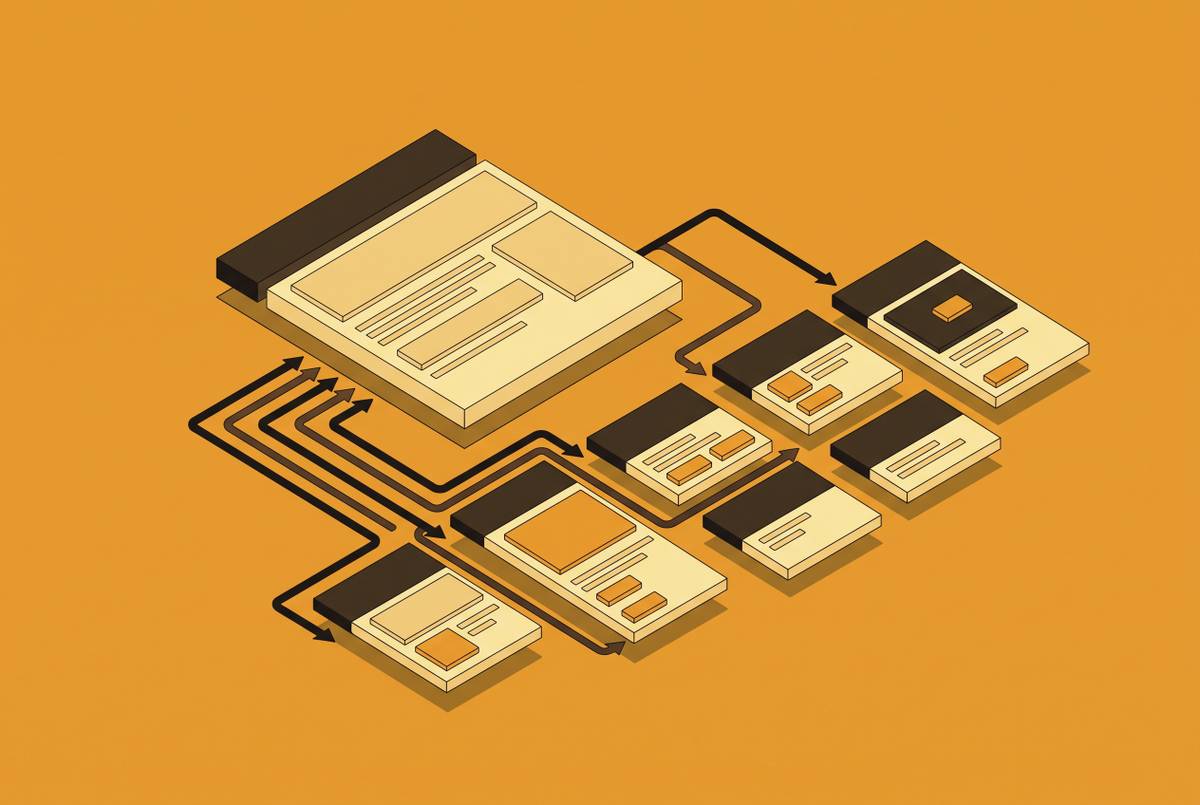
A fully built-out CI/CD pipeline has seven functions, which are build, test, deploy, preview, promote, rollback, and secrets and configuration management. Each has a direct content equivalent. Build compiles Markdown, MDX, or structured content into a static site or API payload. Test checks the prose, schema, links, and front-matter fields that must be there. Deploy sends the artifact that passed review to the live docs domain.
Preview gives every pull request an ephemeral URL where a reviewer can read the rendered page. Promotion moves the staged artifact into production without changing its bytes. That distinction protects what the reviewer actually approved. Rollback returns the site to its last reviewed version when a bad publish escapes the gates. Secrets and configuration management gives each environment its own API keys and webhook tokens without leaking them into logs.
ClickHelp explains that version control preserves access to previous documentation versions and lets team members work simultaneously without overwriting each other’s work. In a content pipeline, the artifact is therefore more than a page awaiting publication. It has a version, a review state, and a recovery path.
How to wire content publishing into an existing pipeline as a named stage
To apply this model, a team should make content publishing an explicit stage tied to the software release. Content lint and schema validation run in parallel with code tests, and failure in either blocks the merge. The docs build runs after the code build succeeds and uses the same versioned artifact to get the right API signature or changelog entry. A shared preview then deploys the app and its docs together. Production requires both code and content approval.
The order creates a dependency. Reviewers can compare the running feature with its rendered explanation before either ships. ClickHelp describes CI/CD integration as a way to synchronize documentation updates with the current software version.
Required front-matter fields include version, publication date, content type, and author, with missing fields failing the build. JSON-LD validation rejects missing or malformed schema required for the page, including Organization or TechArticle schema. An internal link checker treats a broken anchor as a failed test. Branch protection requires the content stage to pass before the release branch merges.
Teams can do this with the publishing platform they already use. Railway has preview environments for each pull request, branch-deploy automation, and one-click rollback. Its MCP server also lets an agent trigger a docs redeploy through the same surface used for code. The tool choice is secondary to the dependency structure. Whatever runs the jobs must keep the software version, the content artifact that passed review, and the production gate linked.
The human-review gate: where editorial approval fits in the pipeline without slowing it down
Human review is compatible with automation because a pipeline can wait for an approval signal. Code review already follows that pattern. A content gate works the same way, pausing the artifact at a defined point and resuming when the required approval arrives. It automates the rule that publication requires human editorial judgment.
For AI-assisted content, that control should span the chain from brief and research through drafting, verification, editorial review, compliance, publication, and monitoring. Each move from one step to the next needs states, permissions, and a recovery path. Within that chain, the factual gate requires every claim to be verified, labeled, or removed. The editorial gate checks voice, structure, clarity, and audience fit. The risk and compliance gate checks legal, regulatory, brand, and policy constraints, while the publication gate confirms that the deployed artifact is the reviewed version with correct metadata.
The approval record also has a regulatory purpose. An AI regulation’s transparency rule applies from 2 August 2026 and provides an exemption for AI-assisted text where a person has reviewed it and takes editorial responsibility. For teams publishing in jurisdictions covered by the rule, a recorded review therefore serves more than editorial housekeeping. The pipeline tracks which artifact received approval, preserving the connection between responsibility and the text that ships.
Keeping this process fast depends on separating routine work from judgment. Automation can handle high-volume product update pages, resource lists, and changelog summaries, leaving reviewers more time for thought leadership, original research, and sensitive subjects. Coverage should not shrink to improve cycle time. Every AI-generated suggestion should remain reviewable and reversible before publication, since bypassing review exposes the release to factual errors, unsuitable tone, and legal risk.
What the pipeline must publish to be cited by AI answer engines
A successful content deploy needs more than valid HTML. AI retrieval systems select passages using signals that include factual clarity, structured markup, consistent entity information, and machine-readable metadata. A gated pipeline can enforce those properties on each release, while a manual workflow may apply them unevenly. The payoff is a publishable artifact whose meaning and identity are easier for retrieval systems to resolve.
Organization schema on the root domain supplies the exact brand name, logo URL, official website, and same-as links to Wikidata, LinkedIn, and Crunchbase. TechArticle or HowTo schema identifies docs and tutorials and their relationship to that entity. Consistency is the essential constraint across these fields. An entity validation gate can catch that drift before publication.
A brand without a Wikidata entry is harder for entity recognition systems to verify, increasing the risk of omission or misattribution. The brand can still be recognized despite that disadvantage. The pipeline can check for a Wikidata QID and flag its absence as a warning before production. It can also trigger an off-site publishing step as part of the broader grounding process.
However, schema cannot rescue vague or unsupported body text. Retrieval works on visible passages and chunks, so the factual gate must govern the words as well as their markup. Credible quotations, clear statistics with named sources, and inline citations increase the chance that a passage is selected. Definitional pages, entity relationship pages, and brand authority signals provide a grounding layer written specifically for AI retrieval. Such pages start directly with the entity, use a descriptive rather than assertive tone, and consolidate external links in a dedicated section, with structural rules enforced through linting.
Measuring whether the pipeline's output is working: AI citation metrics alongside deploy metrics
A green deployment shows that the artifact reached production. It does not prove that answer engines use it. AI citation monitoring checks whether answer engines use the content, much as synthetic monitoring checks a software service after it has been deployed. Its results belong in the same dashboard as deploy frequency and rollback rate, so content delivery has an outcome signal as well as an execution signal.
Four metrics make that outcome more precise. Mention rate is the share of eligible answer-engine runs that name the brand, while citation rate is the share that cite a brand-owned URL. Share of voice measures brand mentions as a fraction of all named brands in the same answer set. Median mention position is the middle ordinal position among answers that mention the brand. Earlier is better for that last measure, but being named is still distinct from earning a citation.
Perplexity, Gemini, ChatGPT, and Claude have different citation behaviors, so an average can conceal absence from one engine behind strength in another. To make comparisons repeatable, a team should use a fixed set of buying-intent questions customers actually ask. Scheduled runs against ChatGPT, Copilot, Gemini, and Perplexity replace ad-hoc spot checks. Each answer should yield structured records that show whether the brand was present, its position and sentiment, and whether a brand-owned URL was cited.
Microsoft’s Bing AI Performance Dashboard, public since February 10, 2026, provides data on citations and grounding queries. Microsoft notes that the dashboard shows only a sample of actual citation activity, so it cannot replace broader measurement. Traditional traffic analytics leave a different gap, since a page can lose Google clicks while gaining LLM citations in the same quarter.
Getting started: the minimum viable content pipeline for a developer team shipping today
Three additions to an existing pipeline provide a practical starting point. Add a content lint job, make docs part of the pull-request preview, and set citation monitoring to run after deployment. These additions connect validation, approval, and feedback without requiring every later capability at once. Their scope is deliberately narrow. Other automation can follow once that path is stable.
The lint job should run with the existing tests or in parallel, failing on missing version, date, content type, or author fields. It should also reject missing or malformed Organization schema on the root and TechArticle schema on docs pages, and fail on broken internal anchors. An entity consistency check should compare the brand name, canonical URL, and same-as links in the schema with those in the visible text. In the preview, deploy app and docs together to the same ephemeral URL. Use branch protection to require approval for content just as it does for code.
For the feedback step, run the fixed prompt set weekly at minimum and daily after a significant content publish. Send mention rate, citation rate, share of voice, and median mention position to the observability store used for deploy metrics. Set a defined citation-rate drop as an alert threshold. A release that crosses it becomes a rollback candidate even if its deployment passed. This connects the published artifact to the outcome it was meant to improve.
Once the minimum pipeline is stable, AI-assisted drafting can send content through the four review gates before it moves to preview. Automated changelogs from commit messages can become versioned artifacts validated against the same front-matter schema. A standing watcher can open a pull request when a product event occurs, accelerating drafting without bypassing approval. Definitional and entity relationship pages can then extend the grounding layer on the same domain.
Documentation should begin when functional requirements are laid out and evolve as the software changes. Making it a required stage gives that timing a durable place in delivery. Releases, grounded content, and measured feedback form a flywheel, building a citation surface that grows with the product and avoids decay between manual updates.