AI Editorial Calendar Tools for Content Teams
AI now helps editorial teams adapt when reality diverges from the plan.

Marketing Week's Career & Salary Survey found that 58% of marketers feel overwhelmed. Editorial calendars are supposed to fix that, and mostly they don't, because most of them are still spreadsheets with a coat of paint. A spreadsheet cannot tell anyone that Thursday's launch content is about to collide with a legal review that hasn't finished.
A static calendar records intentions. It does not adapt when a freelancer misses a deadline, when a stakeholder pulls a campaign forward two weeks, or when the person who owns video suddenly owns half of social too. The moment reality diverges from the plan, the calendar becomes wrong, and it stays wrong until someone rebuilds it by hand.
That gap matters more now because content teams run more concurrent tracks than they used to. Blog, social, email, video, and paid campaigns all move at once, often owned by different people who don't check the same document. Without a dedicated system, teams fall back on spreadsheets, shared docs, and Slack threads, and each fails differently: spreadsheets go stale the second two people edit them at once, shared docs bury decisions in comment threads nobody rereads, and Slack loses the plan entirely once it scrolls past the last hundred messages.
Editorial planning has quietly redefined itself in response. The job is no longer assigning dates. It's managing bandwidth, catching gaps before they turn into missed opportunities, and replanning on the fly when something breaks, which something always does. That's the job the AI layer inside modern editorial tools was built to do, not by replacing a human editor's judgment, but by keeping the calendar honest in real time.
What the AI layer in an editorial calendar does
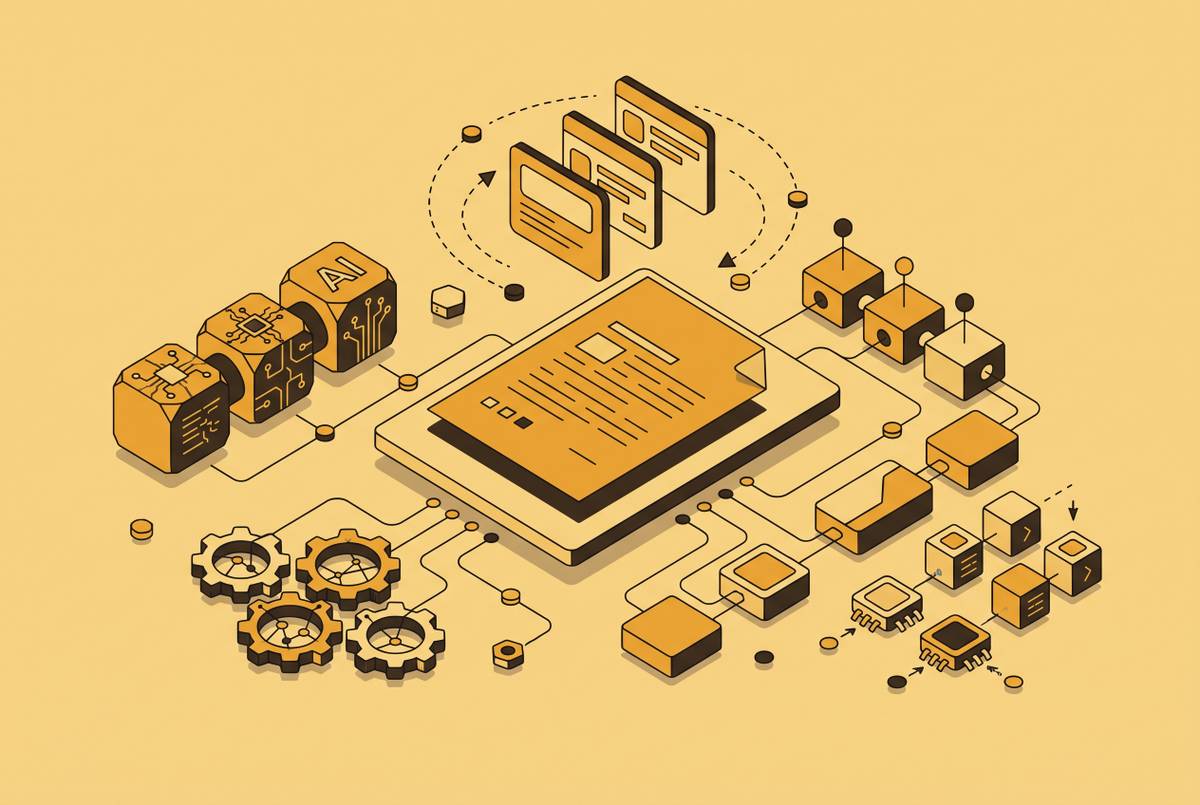
Any digital calendar can schedule a post and assign a task. That part isn't new and it isn't the interesting part. The AI layer sits above scheduling and does four things a plain calendar structurally cannot do.
Dynamic replanning handles the moment a deadline slips or a piece falls through entirely. Instead of leaving a hole in the queue, the system suggests what to pull forward, what to push back, and which evergreen piece can fill the gap without anyone scrambling. Bandwidth forecasting reads team size, publishing cadence, and historical delivery patterns to build a schedule the team can actually hit, factoring in topic complexity and flagging an overloaded week before it collapses under its own weight. Content gap detection compares the calendar against audience data, SEO signals, and competitor coverage, surfacing the topics nobody planned for, which turns the calendar from a production tracker into something closer to a strategy surface. And continuous learning means the system gets sharper by watching what actually shipped on time, what slipped, and what performed once it went live.
Adoption backs the case for this layer: 81% of marketing tech leaders are already piloting or using AI agents in some form. This isn't an experimental corner of the industry anymore, and a team still running a plain calendar in 2026 is choosing to work without information its competitors already have.
None of this replaces an editor's judgment. The AI layer doesn't write the piece, doesn't decide if it's good, and doesn't set the strategy behind it. It executes and adapts inside a strategy a human already defined, which is a narrower and more useful claim than the marketing around these tools sometimes suggests.
The five capabilities that separate strong tools from capable ones
Every vendor in this space claims to use AI. That claim tells you nothing. What separates a genuinely strong tool from one that's merely capable comes down to five questions, and most buyers only ask the first one.
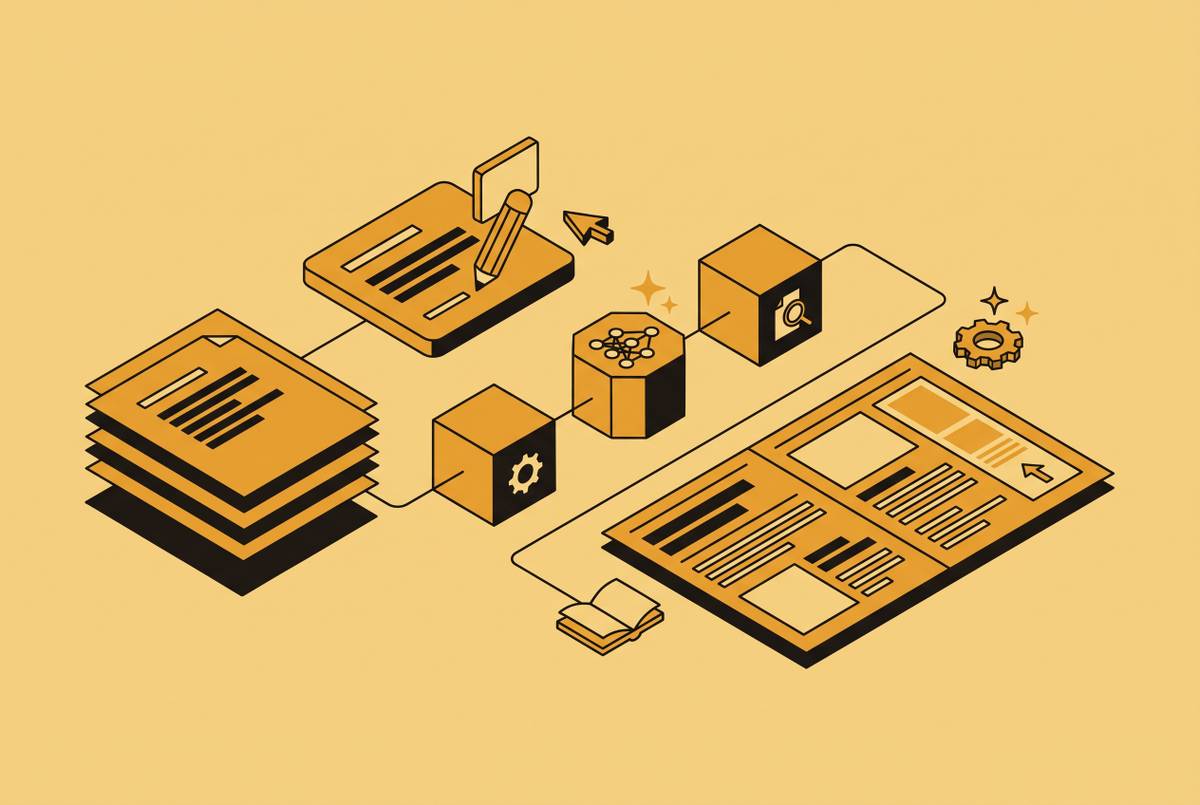
Visual flexibility comes first: can the same plan be viewed as a calendar, a kanban board, a list, and a timeline, without anyone losing context switching between them? A writer wants a list. A manager wants kanban. A stakeholder wants a calendar. Force one view on everyone, and someone keeps a shadow document just to see the plan the way they need to see it.
Workflow configurability asks whether the tool bends to the team's actual status stages, briefing, drafting, review, legal, approved, scheduled, or imposes a generic pipeline and expects the team to adapt to it. Collaboration and approval controls matter just as much: role-based permissions, inline comments, version history, and specifically whether sign-off happens inside the tool or still gets routed through an email chain nobody can audit later.
Integration depth decides whether a date change in the calendar actually does anything. Connect it to the CMS, the social channels, the email platform, and the asset library, and moving a publish date cascades automatically. Skip that, and every schedule change becomes a manual chore across four separate systems.
Multi-brand or multi-client management is the one that quietly breaks tools built for a single in-house team. Does the platform offer centralized visibility across several brands, or does it force a workspace switch every time someone needs to check a different account? For an agency, that single criterion is often the deciding one, and it's the one most buyers check last, if they check it at all.
A few secondary factors round this out: mobile access for approvals on the go, export and reporting options for stakeholder updates, and a pricing model, per seat, per brand, or flat, that actually fits how the team is structured.
How the leading tools compare on these criteria
Six tools get examined against those criteria, and none of them wins on every count. Anyone shopping by star rating instead of by bottleneck is going to end up disappointed by whichever one they pick.
Asana works best for teams running content planning alongside broader project work, not editorial-only shops. Its AI Teammates, launched in early 2026, are prebuilt agents that summarize incoming content requests, triage them, and flag deadlines at risk of slipping. Asana's multi-homing feature lets one content task live inside both the blog calendar and, say, a product launch plan, without duplicating the record, which genuinely helps teams juggling parallel initiatives. The tradeoff: Asana isn't purpose-built for editorial work. There's no native CMS publishing and no content-specific status convention out of the box, so setup takes real time. More than 85% of Fortune 100 companies use Asana, by the company's own figure, which says more about its reach as a general project management platform than about its fit for editorial teams specifically.
CoSchedule has built marketing-specific calendar software since 2013, the longest editorial track record on this list. Its Marketing Suite bundles the calendar, social scheduling, digital asset management, approval workflows, and an AI writing assistant into one workspace. The standout feature is ReQueue, which automatically reshares evergreen content into open social slots based on past publishing performance, cutting out manual repurposing work for high-volume teams. It integrates directly with WordPress, Mailchimp, ActiveCampaign, and Canva, and when a campaign date shifts, related tasks move with it from the same drag-and-drop screen.
Airtable suits teams whose workflows are genuinely relational, not just sequential: connected campaign databases, freelancer rosters, brand asset libraries, and publication trackers that all reference each other. Shift a campaign date, and everything linked to it shifts too, without a manual cascade. The cost is setup time. Teams without someone dedicated to operations tend to end up with bases that drift out of sync and become harder to maintain than the spreadsheet they replaced.
Hootsuite, paired with its Wisdom AI capabilities, is built for enterprise and all-in-one social teams running multiple accounts across platforms. It offers an at-a-glance calendar spanning every social account in one place, with role-based access controls for approvals. It's strongest when social scheduling is the actual job, and a poor fit for teams whose primary output is long-form editorial content.
StoryChief, through its William AI Agent, aims at the full content lifecycle for B2B teams: planning, collaboration, publishing, and performance review inside one canvas. William draws on audience data, competitor analysis, and market trends to suggest what to plan next, not just when to publish it, and one-click distribution pushes content out across channels from the same workspace where it was drafted and approved.
ClickUp fits content operations teams that want heavy customization and plan to run content alongside other operational work. Its AI assistance sits inside the broader task management system, and that flexibility carries a setup overhead similar to Airtable's.
No single platform wins across all five criteria. The right pick depends on which bottleneck actually hurts: editorial workflow, social scheduling, cross-functional coordination, or managing more than one brand at once.
What these tools leave unaddressed for agencies managing multiple clients
Every tool above gets built, fundamentally, around a single brand's content team. Multi-brand management is either missing entirely or bolted on as a series of separate workspaces a team has to switch between, which functions the same as not having it at all.
Agencies feel this in specific, recurring ways. Cumulative analytics across a whole client portfolio don't exist in most of these platforms. Teams get a dashboard per client and build the rollup themselves, usually in a spreadsheet, which defeats the point of buying a tool in the first place. Granular access control, deciding exactly which clients see what inside the platform, is often an afterthought rather than a designed feature. Billing flexibility is another gap: agencies need both centralized invoicing and per-client billing depending on the contract, and most platforms accommodate one or the other, not both. Client-facing reporting tends to run either too raw, exposing the agency's internal workflow, or too generic to demonstrate real value.
Team enablement causes all of this and gets the least attention of anyone. Account managers need to speak credibly about content strategy and, increasingly, AI visibility, not just operate a scheduling interface on a client's behalf.
An account manager who can explain what AI visibility actually means for a client's brand, not just pull up a calendar view, keeps that account on a different footing than one who is, in effect, reselling access to a tool.
Why the editorial calendar is becoming an AI visibility planning tool
Editorial planning has shifted because the ground beneath it moved, and the shift is structural. Gartner's 2026 prediction that traditional search engine volume would fall 25% has, by most accounts, arrived. Meanwhile, Similarweb's Generative AI report puts AI chatbot referral traffic at 1.1 billion visits in June 2025, up 357% year over year, making it one of the fastest-scaling discovery channels in the industry's recent history. EMARKETER projects that 31.3% of the US population will use generative AI search in 2026. That is not a niche behavior anymore, and treating it as one is the mistake most content teams are still making.
The practical consequence for anyone planning content: what goes into the calendar now gets evaluated by two different audiences. Search crawlers still matter, but so do large language models deciding, in real time, what to cite when someone asks ChatGPT or Perplexity a question the brand would want to answer.
Two terms get conflated constantly, so they deserve a precise split here. GEO, Generative Engine Optimization, structures content and brand presence so that systems like ChatGPT, Perplexity, and Claude choose to cite or recommend the brand inside generated answers. AEO, Answer Engine Optimization, is narrower: structuring content so it can be lifted directly into featured snippets, knowledge panels, and AI Overviews without requiring a click at all.
The break from traditional SEO runs deeper than most teams have internalized. Roughly 85% of brand mentions in AI search originate from third-party pages, not from anything the brand owns, so a brand gets cited through someone else's page far more often than through its own site. The calendar has to plan for where content lives, not just what it says. GEO visibility itself is a mention rate rather than a ranking position the way organic search results are, either. It's a mention rate, how often a brand shows up across many different AI-generated answers to many different prompts, measured in frequency rather than position.
How AI visibility instability changes what content teams need to plan for
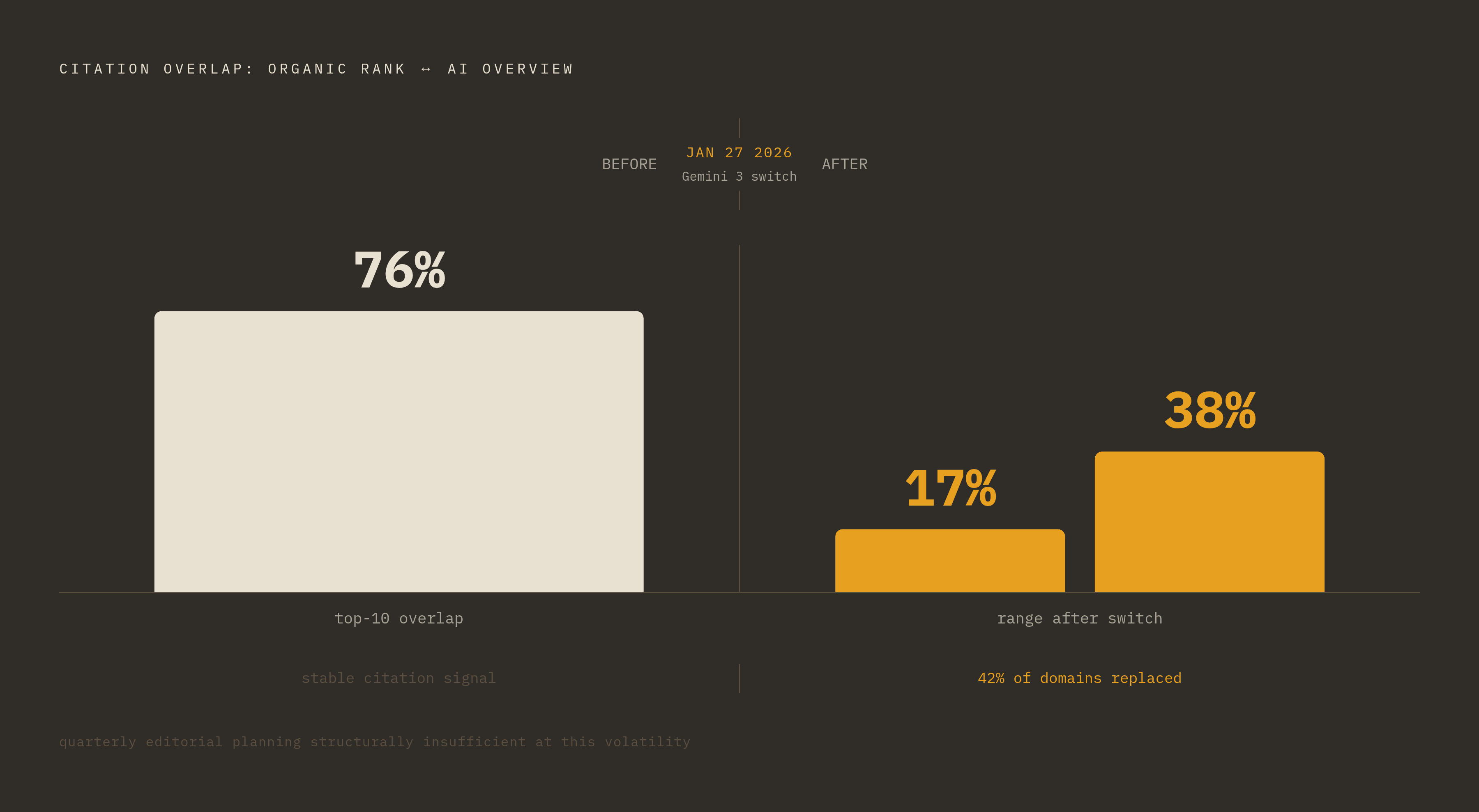
Organic search rankings move slowly, on the scale of months. AI citations do not. EMARKETER finds that between 40% and 60% of cited sources change month to month across Google AI Mode and ChatGPT, a volatility rate with no real precedent in traditional SEO.
The clearest evidence of that volatility landed on January 27, 2026, when Google switched AI Overviews over to Gemini 3. Roughly 42% of previously cited domains got replaced in that transition. The overlap between a page's top-10 organic ranking and its AI Overview citation, which had sat around 76%, collapsed to somewhere between 17% and 38% depending on the dataset measured. A domain that ranked well and got cited reliably in December had no guarantee of either by February.
That instability changes what "the plan" needs to mean. A calendar optimized for last quarter's citation patterns can be wrong by the time it's built, so the plan can't be a quarterly document anyone sets and walks away from. It has to be something the team revisits on a rolling basis, closer to how a paid media budget gets checked weekly than how an editorial calendar traditionally got locked in once a quarter.
Most teams aren't doing that yet. 84% of brands still aren't tracking AI search performance at all, and only 14% have anything resembling a defined AI visibility strategy. Call that what it is: a monitoring gap wide enough to drive a truck through, and for agencies willing to build the muscle now, the clearest opening in the room, since most clients haven't started and won't know to ask for it until a competitor already has.
Google's own position deserves an honest mention, because it complicates the picture rather than resolving it. Google's guidance states that optimizing for generative AI search is still just SEO, and that sites don't need new machine-readable files or an llms.txt to appear in Google's AI features. That sits in real tension with the citation volatility data above. Readers evaluating advice on this topic should hold both facts at once rather than picking whichever one is more convenient.
What content performs well in AI-cited results
One tactic has the strongest empirical backing of anything in this space. Princeton research shows that content built around verifiable statistics and named citations achieves 30% to 40% higher AI visibility than unoptimized content. That's close to a doubling in some cases, and it means the calendar should plan for formats that carry both elements natively rather than bolting a stat on after the draft is done.
Traditional SEO hasn't gone irrelevant, either. Nearly 40% of Google's AI Overviews cite results that already rank in the top 10 organic results, and nearly 70% cite something ranking in the top 100. GEO doesn't need its own separate content track running parallel to SEO. It needs the two folded into the same plan, because a page that never ranks organically rarely gets picked up by the model either.
Framed strategically, GEO breaks down as roughly 80% positioning and ecosystem presence against only 20% technical execution. That ratio puts the editorial calendar, not a technical SEO audit, in charge of the work that actually moves the needle, and teams that keep funneling GEO budget toward technical fixes are optimizing the smaller lever.
Platform distribution is part of that positioning. LLMs pull heavily from Reddit, YouTube, and Wikipedia, and Reddit alone has 100 million daily active users generating the kind of unscripted brand conversation these models weight heavily. A calendar built entirely around owned content is missing most of where the citations actually come from.
Three formats belong on the calendar as planned items, not afterthoughts: statistic-rich pieces structured for easy extraction, third-party contributions like Reddit AMAs, LinkedIn articles, and YouTube explainers, and evergreen reference content built to answer the kind of question that recurs across many different prompts over time. The calendar is where a GEO strategy actually turns into something a team executes week over week, but only if the team plans for it on purpose and checks whether it's working.
Choosing a tool that fits how the team plans
No single best tool exists here, and choosing one by reputation instead of by bottleneck is how teams end up paying for capabilities they never touch. The right question is which specific gap is costing the team the most time this month, not which platform other people rate highest. It's which specific gap is costing the team the most time this month.
A team whose main problem is editorial workflow inside a single brand should look at Asana or CoSchedule, depending on whether they want a general project platform that flexes toward content or a tool built for editorial work from day one. A team drowning in cross-functional complexity, campaigns, freelancers, and asset libraries all tangled together, probably needs Airtable's relational structure more than a simpler calendar view. A team whose real bottleneck is social scheduling across many accounts fits Hootsuite's model, and a B2B team trying to run planning, publishing, and performance review from one canvas should look at StoryChief. ClickUp suits a team that wants content folded into a broader operational system rather than kept separate.
None of that changes much for an agency managing several clients at once, except that the multi-brand gap now carries the deciding weight rather than a secondary one. A general-purpose tool can still handle the day-to-day production work. It just won't give an agency the portfolio-level view, the flexible billing, or the client-facing reporting the job actually demands, and it certainly won't train an account team to talk credibly about AI visibility. That last piece is turning into the real differentiator in how agencies retain clients going forward, and it has very little to do with which calendar view someone happens to prefer.